Burlamacca is not a picturesque fishing village staged for visitors. It is a working channel where a small fleet of trawlers still lands a daily catch for the trattorie of the Tuscan coast. Miss the window and you are left with a pleasant canal, some Liberty facades, and a scent that will tell you what you just missed.
The canal in one paragraph
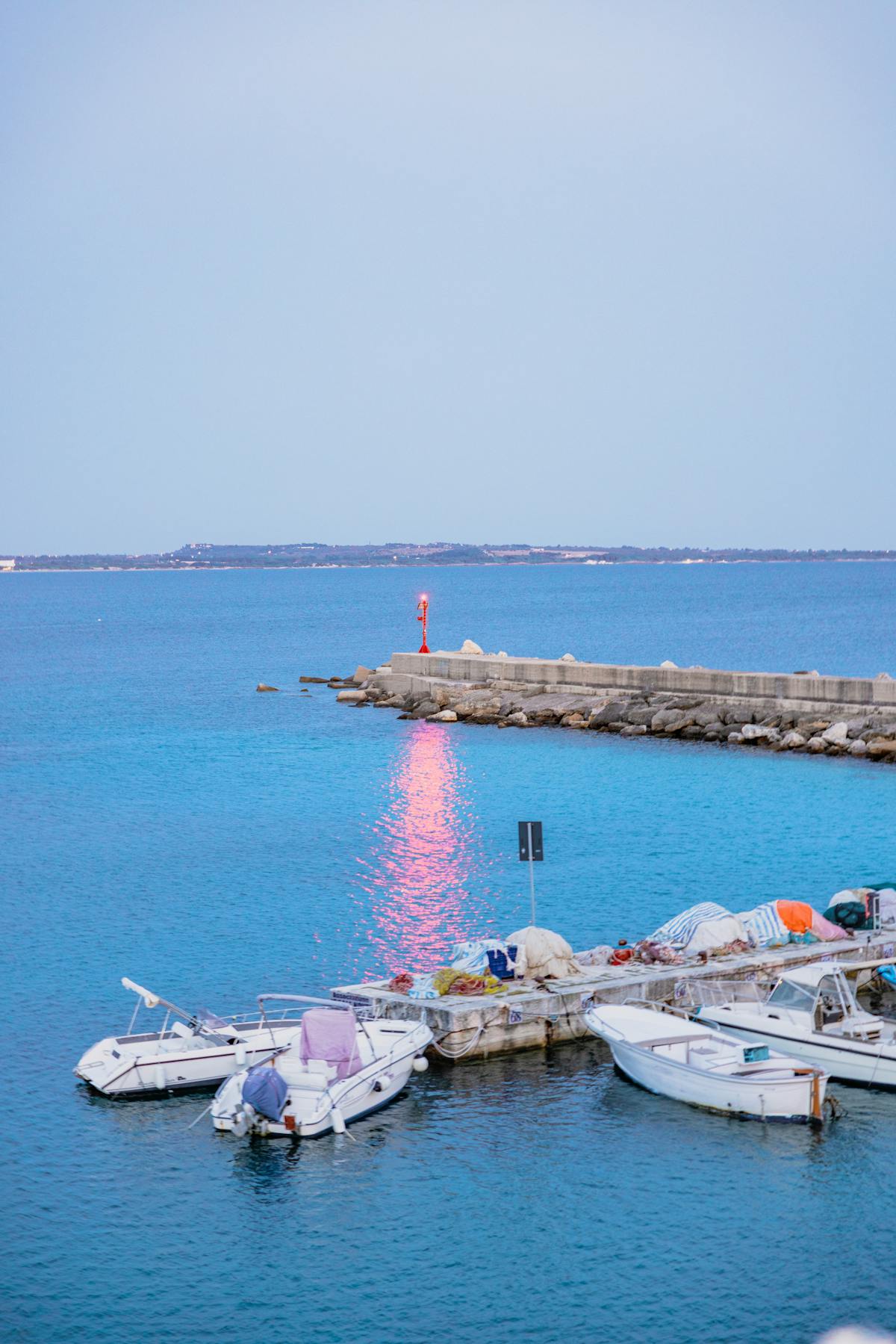
Canale Burlamacca was cut in stages from the late seventeenth century under the Medici and refined by their Lorraine successors — originally a drainage and shipbuilding artery for a marshy hinterland, later the seaward conduit for Viareggio's timber trade. It runs from Lago di Massaciuccoli to the Tyrrhenian, lined on its seaward stretch by Liberty-era houses and widening at its mouth into a proper darsena with boatyards and a small trawler fleet. A brief history sits on the Comune di Viareggio site.
Two things to know, practically. The harbour mouth is where boats come and go; the northern quay of the darsena is where the catch lands.
What actually happens
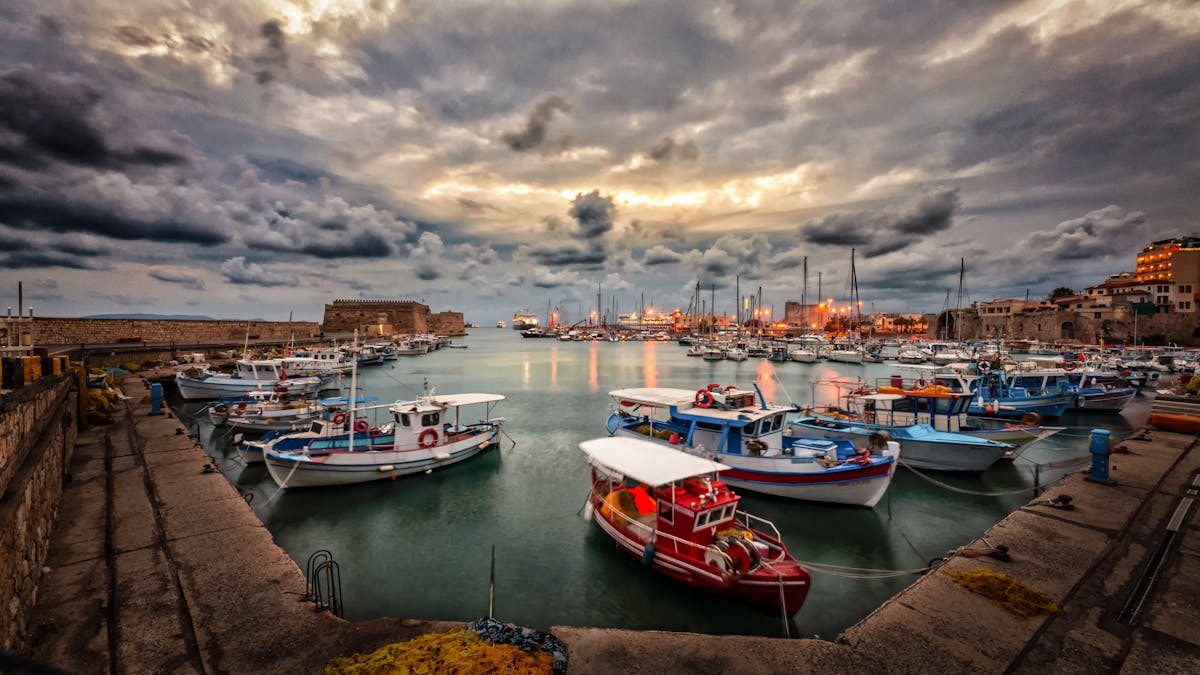
Trawlers come in against the current and the dark. In summer the first engines are audible around 4:00; by 4:30 the fleet is tying up in a loose order built from decades of habit. Restaurateurs arrive in small vans — many with the trattoria's name on the door, some unmarked — and wait on the quay. A polystyrene box goes from boat to van, a short hand-gesture of a conversation happens, cash sometimes changes hands, sometimes not, and the van leaves. No stalls. No sign saying "market".
Visitors get this wrong first. They look for a fish market like the covered Forte dei Marmi hall — a building, a counter, a price tag. None here. What exists instead is a working wholesale handover, sketched in the open air, with incidental retail for the patient.
Burlamacca is not staged. It is simply not hidden. Those are different things, and travellers who confuse them tend to leave disappointed, or to leave with a kilo of palamita bought politely.
Informal retail does happen. Some crews will sell directly to a civilian who has waited quietly and asks, in passable Italian, whether anything is available. Price is fair rather than cheap — ten to twenty percent below the morning counter at the nearest supplier. Cash only. No bag. Bring a cool-box for anything beyond an hour, and assume nothing is filleted.
When to arrive
Rhythm shifts with season and Tyrrhenian weather. A summer high-pressure week sees the first boats in by 4:00 and the quay empty by 6:30. Winter is later and more variable: a northerly libeccio storm can keep the fleet tied up for two days, and when they do go out they return to an 8:00 or 9:00 quay. Nothing happens on Sundays, and the first week of August is quiet when much of Italy closes.
- Summer (May–September): arrive on the quay by 4:30. Leave by 6:30.
- Shoulder (March–April, October): 5:30 to 7:00 is the window.
- Winter (November–February): 6:00 to 7:30, and only on calm days.
- Sundays, feast days, 14–16 August: do not bother.
Walking from central Viareggio is short — fifteen minutes from Piazza Mazzini. At that hour the light along the canal is extraordinary, which is a separate and lesser reason to go.
What not to do
A working quay runs on unsigned, tight, real etiquette. Breaking it will not get a tourist shouted at — Viareggio does not work that way — it will get them quietly ignored, which is worse, because then no-one sells them anything.
- Do not block loading. Vans reverse to specific points. Stand well back of any boat tying up, behind the bollard line.
- Do not handle fish without permission. Those boxes are someone's inventory. Lifting a lid, prodding a tail, or shifting a crate to see behind it reads as a small theft of trust.
- Do not flash-photograph faces. Crews are tired, unshaven, and working. A wide shot of the boats is fine. Zooming on a skipper's face without asking is not.
- Do not haggle in the vulgar sense. If a price is quoted, pay or decline. A raised eyebrow is a counter-offer; an argument is a parting.
- Do not ask about "the best catch". Crews are superstitious and direct, and the question reads as either commercial espionage or naivety. "What's good today?" is the acceptable form.
Nearest coffee
Two bars along the Lungocanale open early enough to catch the market hours. Neither is a destination. One is a narrow, brightly lit stand-up place favoured by the crews themselves, serving espresso, a cornetto warm in the first hour and cool thereafter, and grappa offered unironically before seven. Fifty metres on, a second bar has a terrace, slower service, and a better view of the canal — where restaurateurs sit once their run is done.
Neither takes cards reliably before eight. A five-euro note covers two espressi and a cornetto with change. Breakfast on a working quay is an exercise in standing up; sitting is for the tourists further down the seafront, which is fine, correct, and a separate pleasure.
For wider context on Viareggio's coastal mornings, see our entry on Bagno Balena. First-time orientation sits well on Lonely Planet's Versilian coast pages; visitor reports are summarised on Tripadvisor's Viareggio listings.